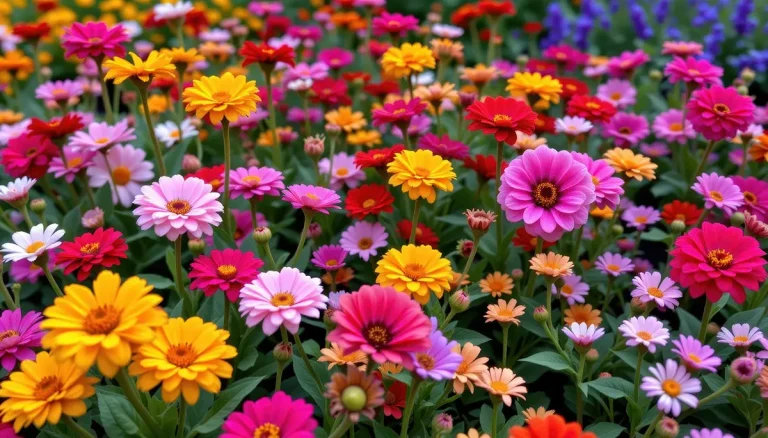
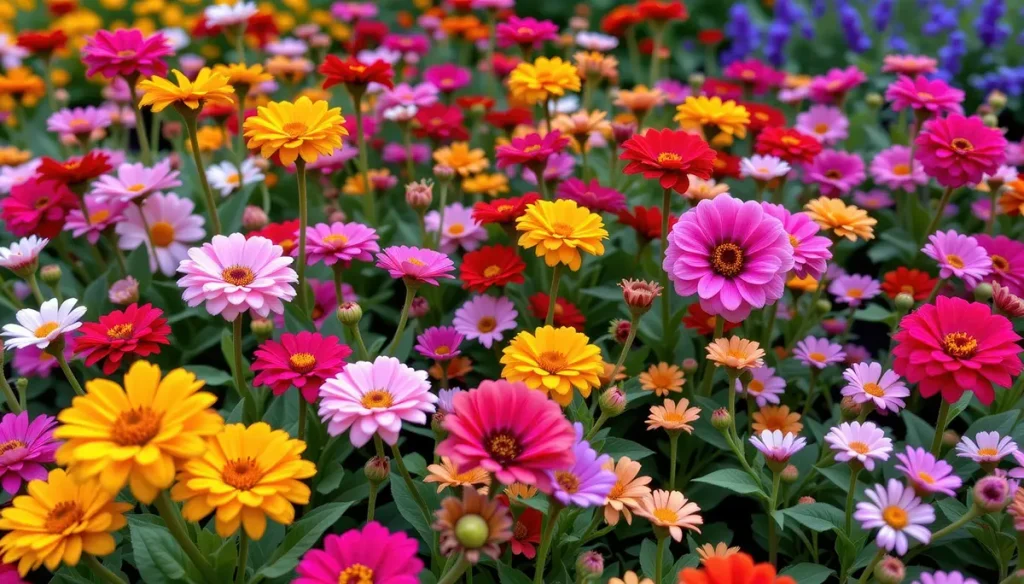
If you want to add some vibrant colors to your summer garden, think of zinnias. They’re easy to sow, come up quickly, flower profusely, bloom all summer and into the fall, and need little or no care (except for occasional deadheading. In some regions, they can bloom all year long.
Zinnias add vibrant color to your summer gardens. An added benefit is that they will bloom all summer and into the fall. Some zinnia species bloom all year long in some areas of the Gulf Coast (USDA Cold Hardiness Zones 8 and 9).
Zinnias are incredibly easy to propagate. Even the hybridized versions, which are not considered true native plants, have the same germination habits as their original ancestors. But don’t discount the native specimens. They are also worthy of your garden.
Here’s what to do:
- Prepare your soil. You may want to dig down several inches and mix the existing soil with compost. Drop the seeds on the surface of the soil.
- Step on them so they make firm contact with the soil.
- If you want, cover them with about 1/4 inch of good soil. (I don’t find this necessary, but because many sources recommend it, you may want to do it. If you do, don’t put more than 1/4 inch.)
- Water well, but gently so you don’t dislodge the seeds.
- Zinnias will take several weeks to germinate, so be patient.
- Zinnias make great cut flowers, so when they reach maturity, cut some for inside.
- Although some people say you have to fertilize hybbriid zinnias, I have never done that.
Interesting Facts about Zinnias
- These beautiful flowers originated in Mesoamerica (parts of modern Mexico, and into Guatemala, Belize, Honduras and El Salvador. The Aztecs were already growing zinnias before the Spanish conquistadors got there. The Aztecs called them “Cempoalxochitl”, which means “flower with many petals,” but they also called them “plants that are hard on the eyes”.
- Zinnias got their name from the German physician, botanist and director of the Botanical Garden of Gottingen University, Dr. Johann Gottfried Zinn.
- A native zinnia (Zinnia elegans) was the first flower to be grown in space. In 2016, astronauts grew zinnias in a special system aboard their mission.